
This summer, Arizona Elk Society volunteers took on a new project at Holloway Springs, located just south of Williams and only one draw over from our recently completed HIIT Springs project. What started as a two-weekend fence build turned into another great example of what can be accomplished when a dedicated group 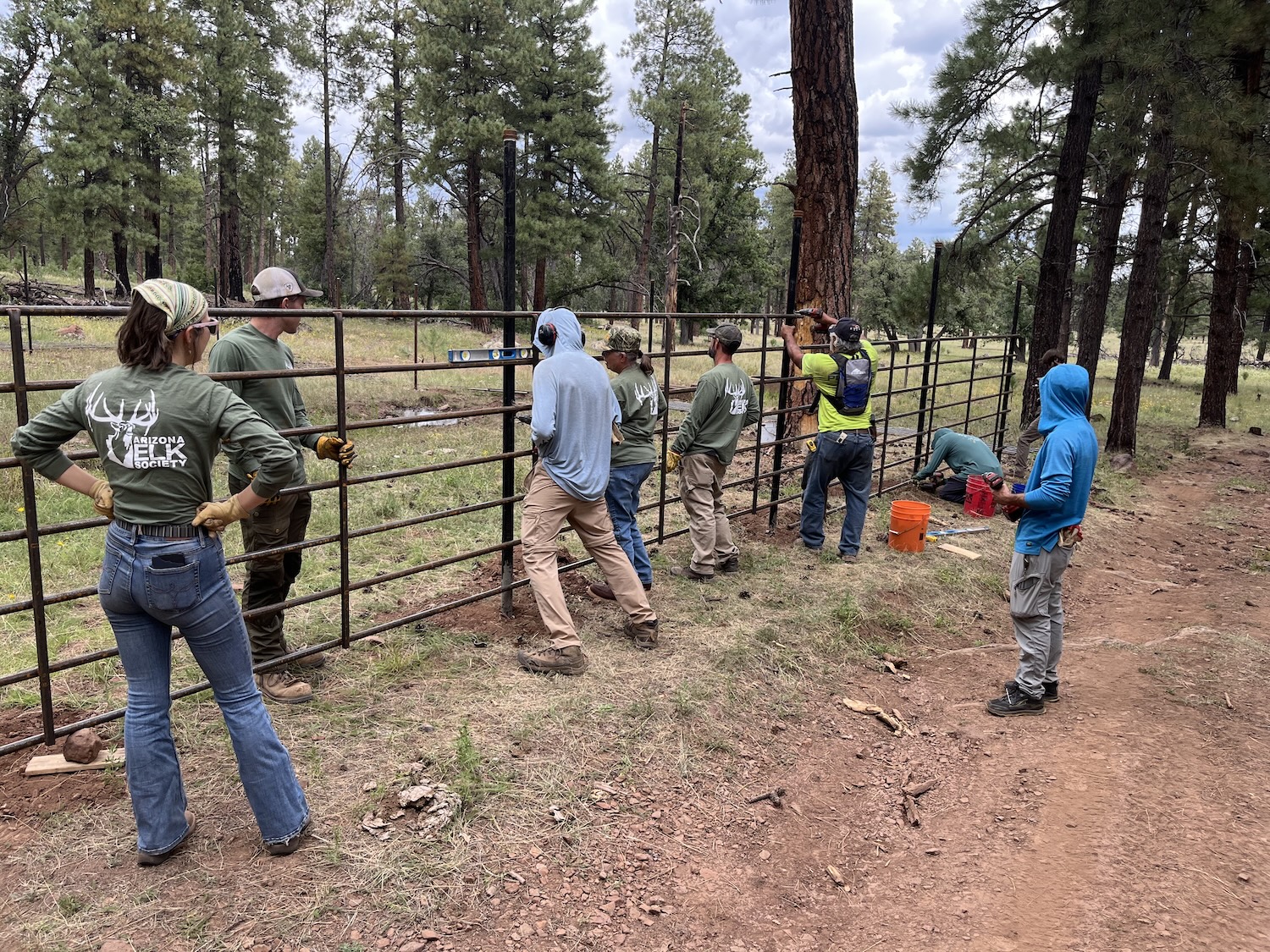 of volunteers comes together.
On Friday morning, our crew arrived at camp and quickly got everything set up. By about noon, we headed down to the project site with one main goal: get all 32 fence posts set before the weekend rain moved in.
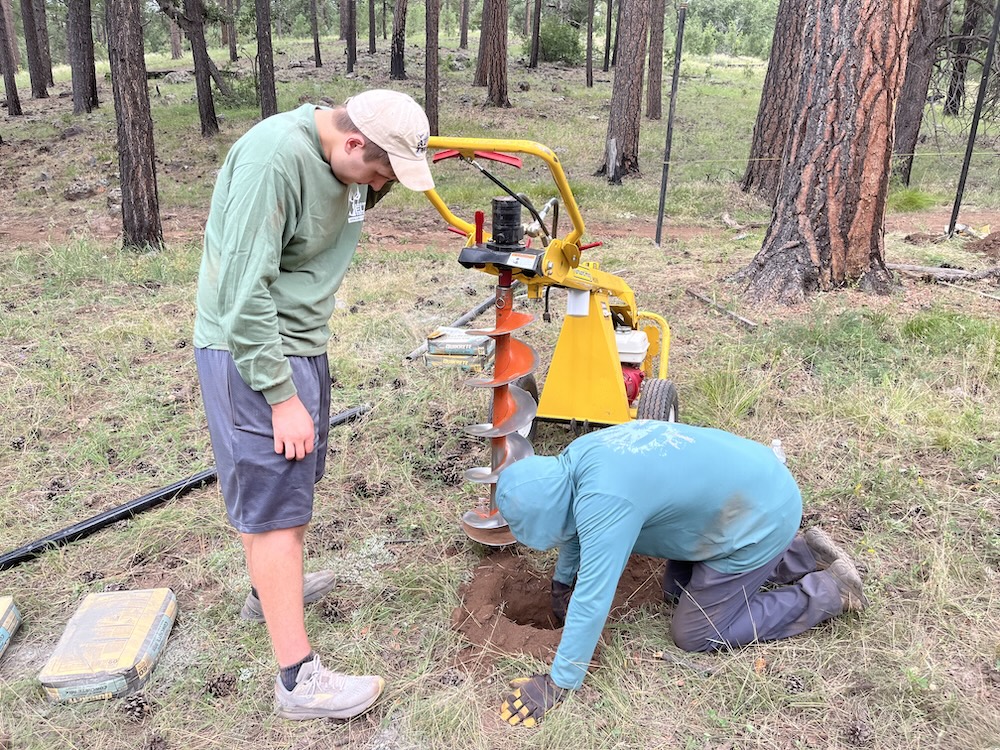
We divided into several crews to keep things moving. One crew operated the two-man auger to dig the post holes, another followed behind cleaning the holes to the required 24-inch depth, and a third crew hauled posts and concrete to each location and set the posts. By the end of Friday, we had just under half of the posts set. We headed back to camp for a well-earned dinner of ziti and garlic toast before settling around the campfire for some great conversation.
Saturday morning brought coffee, breakfast burritos and the aftermath of a long night of storms and rain. After a quick safety meeting, we headed back to the jobsite to finish setting the remaining posts and begin staging the 20-foot fence panels.
We were fortunate to have a few more volunteers join us Saturday morning, including a gentleman who had stopped by camp the night before to see what we were working on. He happened to own property nearby and generously offered to bring his tractor over to help move and stage the heavy panels. His help made a big difference!
By the end of Saturday, the post work was complete, and the panels were staged and ready for our return trip. As we packed the last of camp into the trailer, a light rain began to fall. We knew we would be back in two weeks to finish the job.
Two weeks later, our crew returned to Holloway Springs to finish what we had started. We arrived Friday morning, set up camp, and headed down to the project site with another busy weekend ahead. Our goal was to get all of the fence panels installed Friday and complete the top and bottom rails on Saturday.
The 20-foot panels made quick work of the installation, and within just a few hours, our crew had all 330 feet of fence panels attached to the posts. Of course, the weather had other plans. As we finished up, the clouds rolled in and the rain began coming down hard. With lightning in the area, we packed up and headed back to camp. The storm continued for several hours, including a very close lightning strike near camp! We moved the grills under a canopy and managed to get our fajita dinner cooked before settling in for another evening around the campfire.
Saturday morning started with breakfast burritos and another quick safety meeting. Knowing more rain was forecast for the afternoon, we got an early start. Several crews worked simultaneously, including a cut team, a top rail crew and a bottom rail crew.
After about five hours of hard work, the fence was complete—including the gate!
Another project was finished thanks to the dedication, teamwork and willingness of our amazing volunteers to work through whatever Mother Nature threw our way. From digging and setting posts to hauling materials, installing 330 feet of panels and completing the rails and gate, this project took a lot of hands and a lot of hard work.
Thank you to everyone who came out and helped make the Holloway Springs project a success. We couldn't do this work without you!
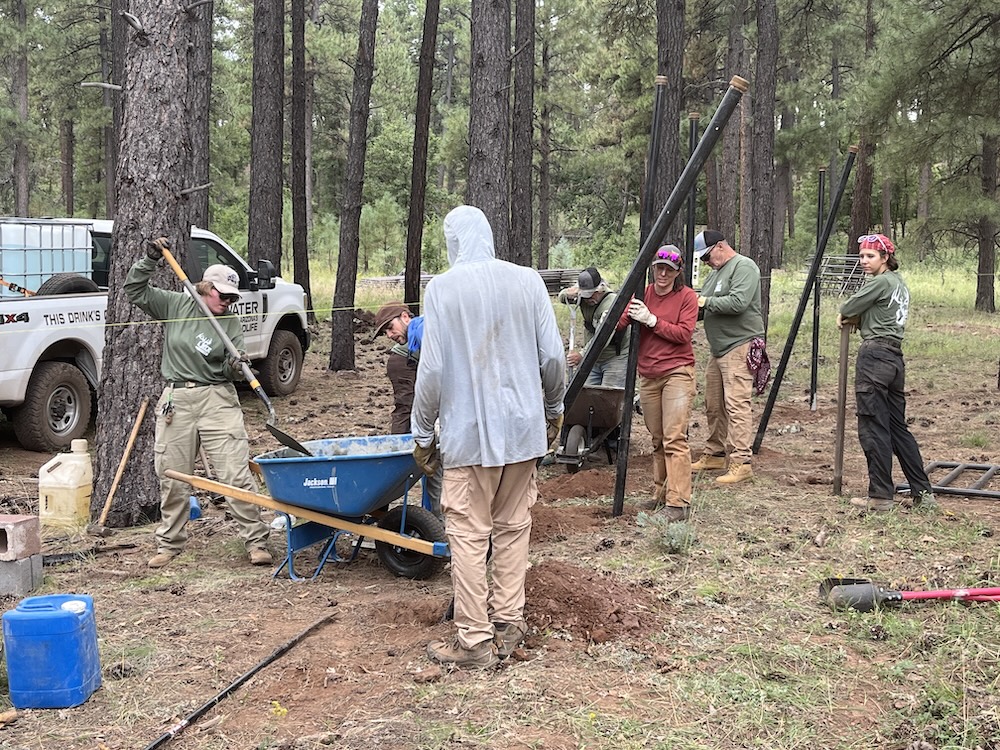
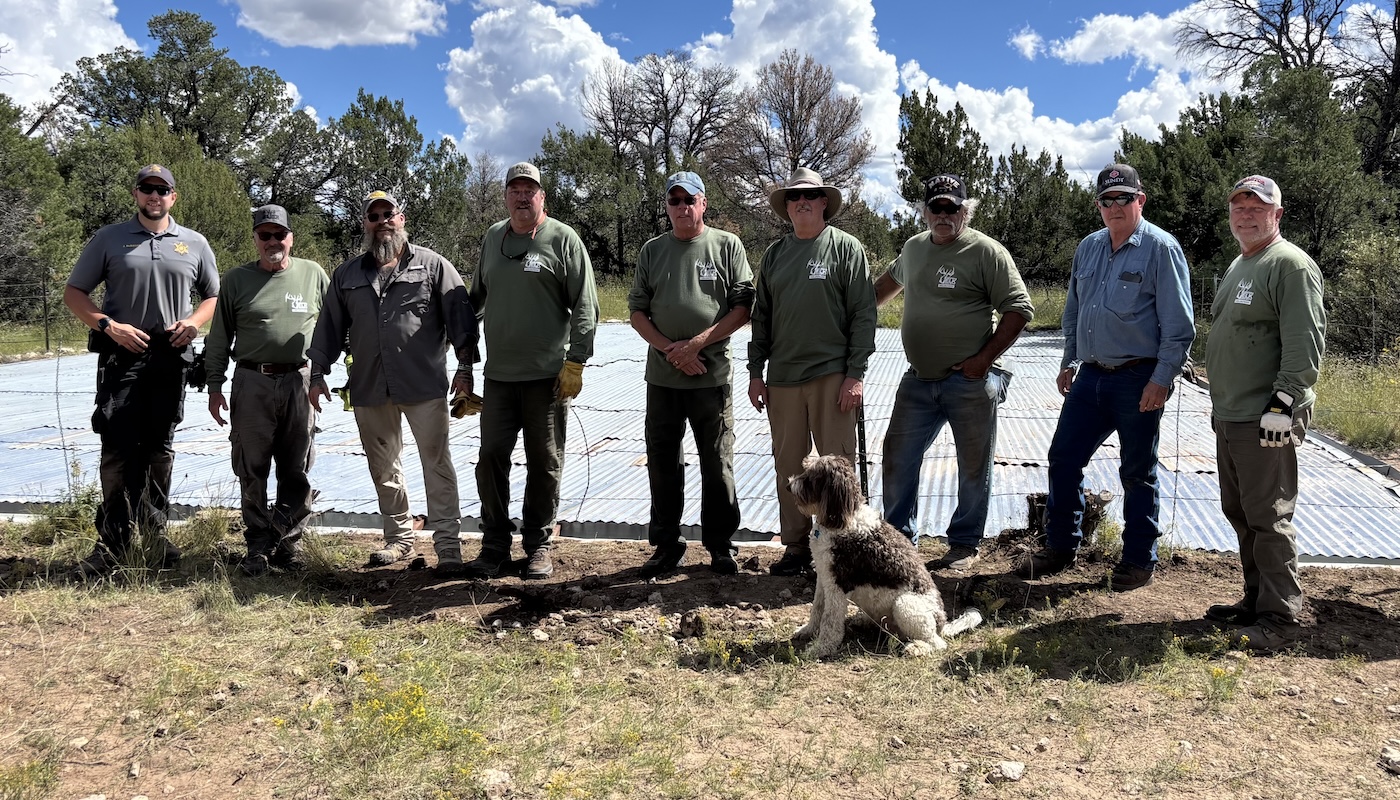
On September 19, 2026, fourteen Arizona Elk Society volunteers gathered to complete Phase II of the Sponcellar Water Catchment project in Game Management Unit 4B. Working alongside John M., the Arizona Game & Fish Department's 4B Unit Manager, our volunteers spent the day making important improvements to the 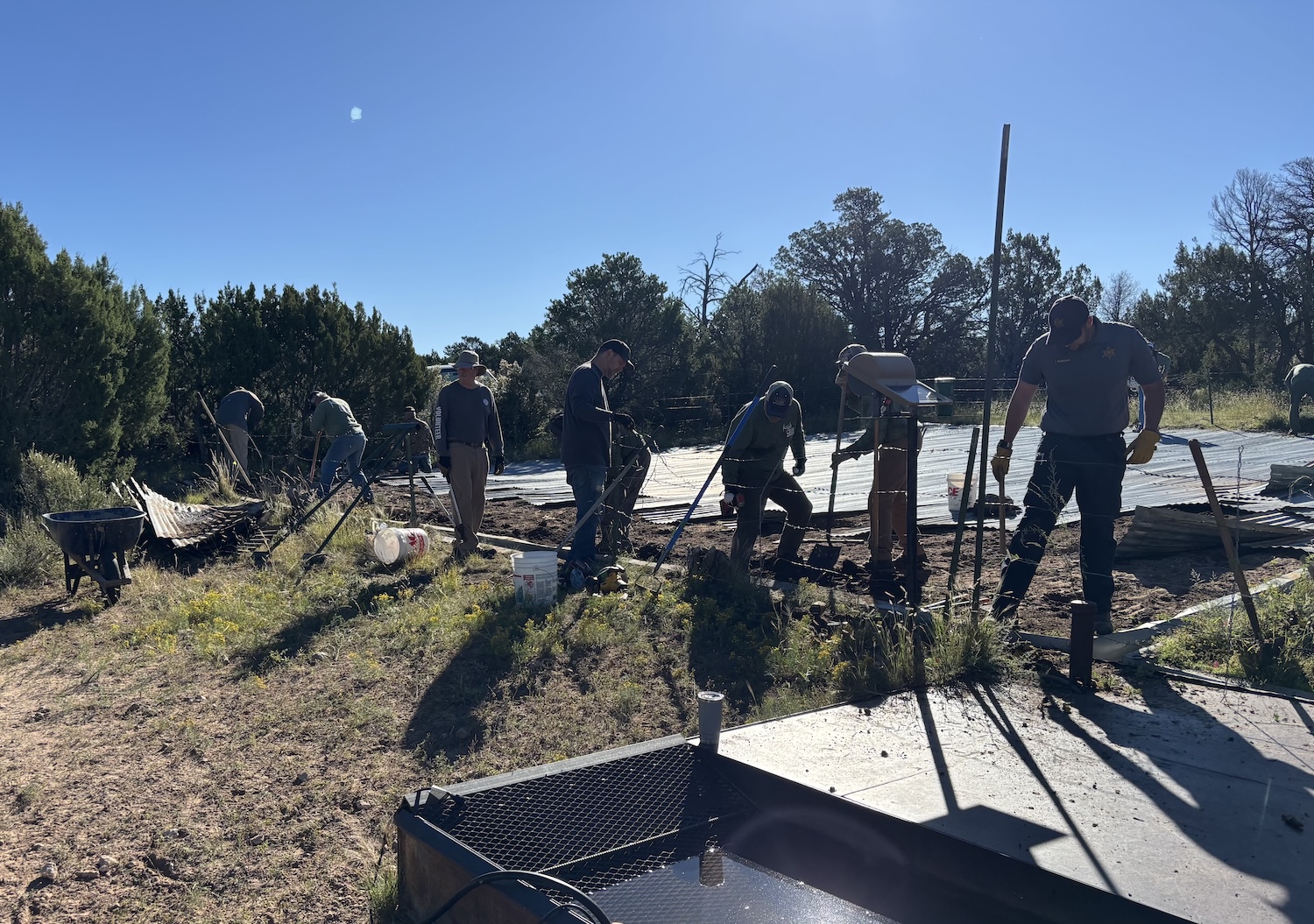 catchment surface and collection system.
This phase of the project focused on correcting the grade of the collection surface and improving the gutter drainage system. Volunteers installed several sections of gutter, added surface panels and installed a walk-through gate that will provide easier access to the collection system for future repairs and routine maintenance.
While these may sound like small improvements, every part of a water catchment system plays an important role. Proper grading and drainage help ensure that available rainwater is directed into the collection system rather than being lost. Making the system easier to access also means future maintenance and repairs can be completed more efficiently.
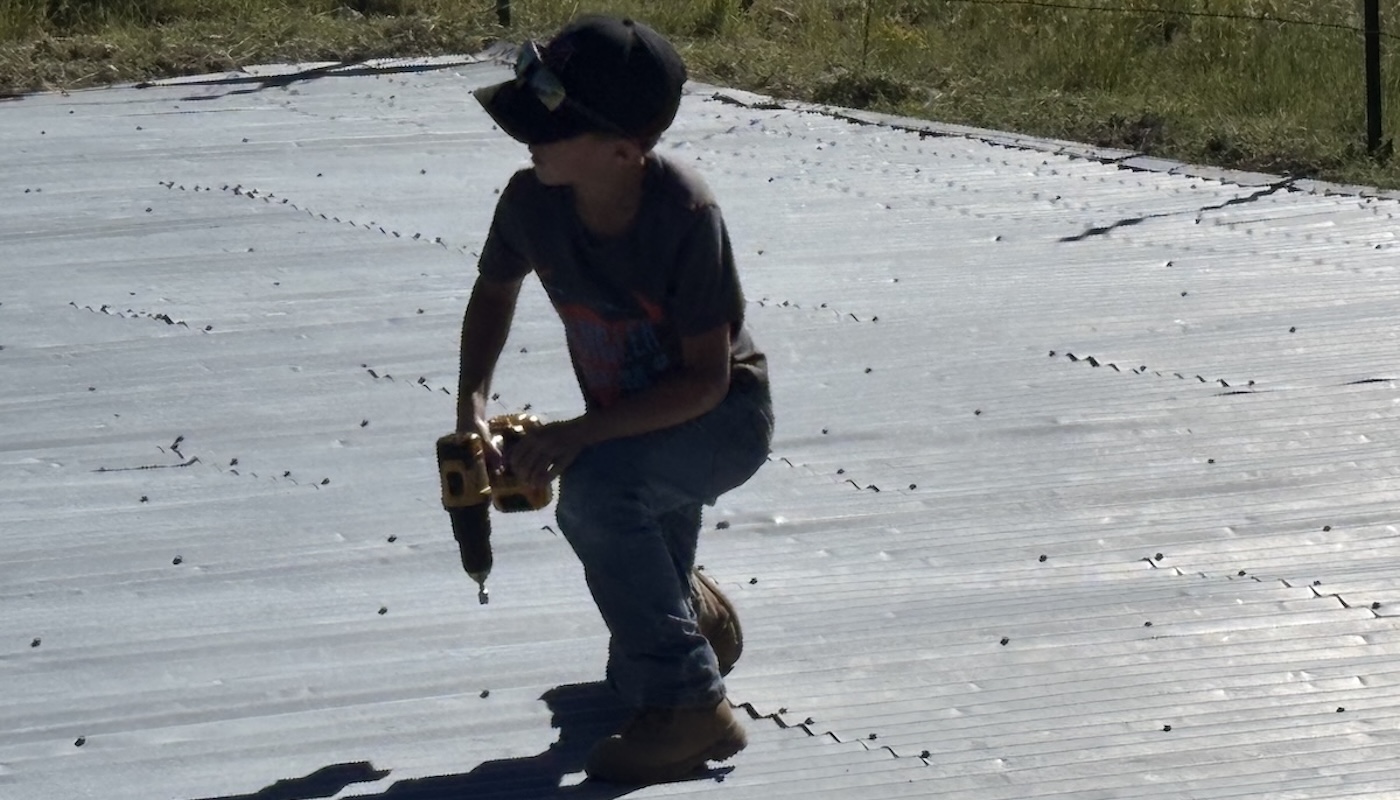
As with all of our habitat projects, the work took teamwork, tools and plenty of hands. Our volunteers spent the day drilling, installing, moving materials and putting the finishing touches on the catchment. By the end of the day, Phase II was complete and the Sponcellar Catchment was ready to continue providing an important water source for Arizona's wildlife.
We had some extra help on the jobsite from Easton, who jumped right in and wasn't afraid to get his hands dirty. Easton helped with the project and even got in on the drilling. He was a great addition to the crew and showed that you're never too young to lend a hand and help improve Arizona's wildlife habitat.
We also had a four-legged visitor along for the day. Beau, one of our volunteer's dogs, hung out with the crew and made sure he was included in a few pictures along the way. Every good AES project needs a jobsite supervisor, and Beau was happy to take on the role!
Our volunteers were also treated to lunch provided by the Heber/Overgaard Ladies Eagles Club. We are grateful for their generosity and for the opportunity to support a local community organization in the process.
Partnerships like this are an important part of the work we do. Habitat projects often bring together volunteers, wildlife professionals, land managers and local communities, all working toward the same goal—improving Arizona's wildlife habitat.
The Sponcellar project is one piece of a much larger effort by Arizona Elk Society and the Arizona Game & Fish Department to restore and improve existing wildlife water sources.
On April 22, 2025, Heritage Clearance was received from Charles D., Lakeside District Ranger with the U.S. Forest Service, covering eight of ten trick tanks located in Units 4B and 3C. Since receiving that approval, AES has worked to restore three of those eight approved trick tanks.
AES is continuing to work with Paul, Region 1 Manager, to establish priorities and coordinate future project dates. Each restored catchment adds another piece to the network of water sources available to wildlife, particularly in areas where reliable water can be difficult to find.
These projects are not always the biggest or most visible projects we take on, but their impact can reach far beyond what we see on the workday. Water is one of the most important resources for Arizona's wildlife, and maintaining these systems helps ensure that water remains available when wildlife need it most.
A big thank you to our 14 volunteers who came out to complete Phase II of the Sponcellar Water Catchment project, to Easton for being such a great helper, and to the Heber/Overgaard Ladies Eagles Club for providing lunch. We also can't forget Beau, who did an excellent job of keeping an eye on the crew!
One project. One water source. One more step toward better habitat for Arizona's wildlife.
Water is one of the most important resources for Arizona's wildlife, and maintaining reliable water sources across the landscape is a big part of Arizona Elk Society's habitat work. Recently, AES partnered with the U.S. Forest Service, Arizona Game and Fish Department, Norfab Steel & Fabrication and Friends of Northern Arizona 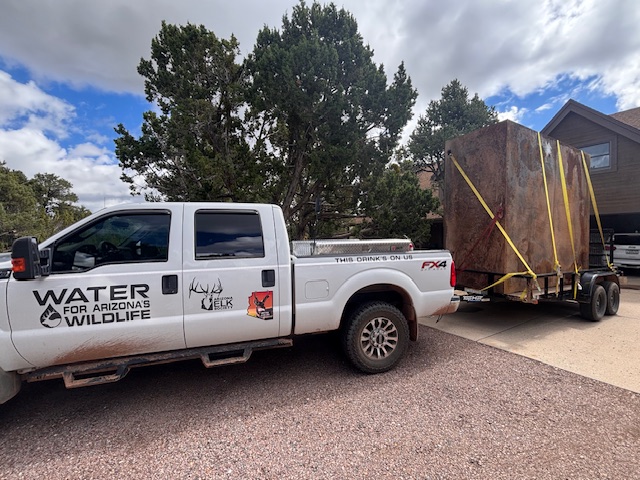 Forests (FONAF) on an important project to significantly increase water storage at two wildlife water catchments.
With approval from the U.S. Forest Service and Arizona Game and Fish Department, AES worked with Norfab Steel & Fabrication to construct and install three new 3,360-gallon drinkers. Combined with improvements made to the collection aprons by FONAF and the reuse of an existing drinker, these projects will provide 11,930 gallons of water storage across the two sites.
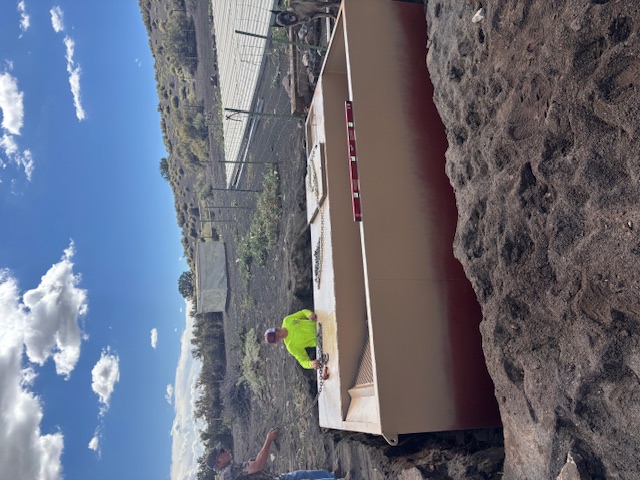
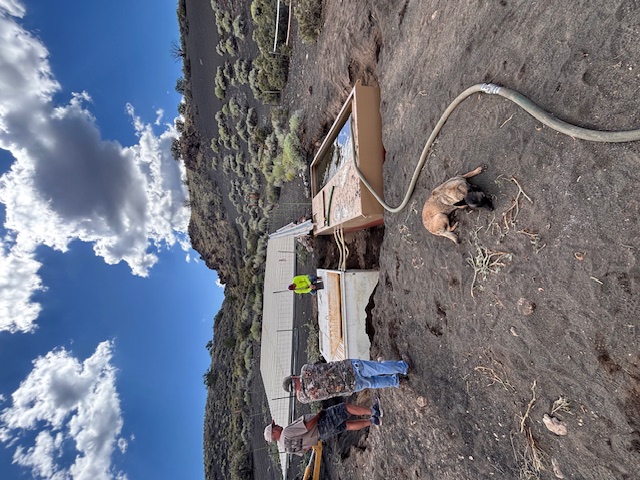
The first stop was the Woodhouse Mesa Trick Tank. AES salvaged the existing 1,850-gallon drinker and relocated it on site. A new 3,360-gallon drinker constructed by Norfab was then installed as the primary drinker, collecting runoff from the catchment apron.
Earlier in the summer, Friends of Northern Arizona Forests had enlarged the apron, allowing it to collect more rain and snowmelt and direct that water into the storage system. Once the new drinker was installed, the original 1,850-gallon drinker was put back into service and three water lines were installed from the new drinker to collect overflow.
The result is a much-improved system with 5,210 gallons of total water storage at the site.
The existing drinker had only been installed in January 2024 to replace an older leaking drinker. Because of its limited capacity, AES began working with the agencies soon afterward to find a way to increase the amount of water that could be stored at the site.
The following day, the crew moved to the Red House Trick Tank, where the site received a complete renovation.
The existing drinker had served the site for more than 50 years but was leaking and had reached the end of its useful life. It was removed and recycled at a salvage yard in Flagstaff. Two new 3,360-gallon drinkers constructed by Norfab were installed in a perpendicular pattern to maximize water availability for wildlife. Using the same three-pipe overflow system, the two drinkers were connected, with one serving as the primary tank collecting water from the apron and the second serving as additional storage for overflow.
Once again, FONAF had enlarged the catchment apron earlier in the summer, increasing the site's ability to collect valuable rain and snowmelt. With the two new drinkers in place, the Red House site now has 6,720 gallons of water storage.
Together, the improvements at Woodhouse Mesa and Red House provide an additional and much-needed increase in water storage, bringing the total capacity at the two sites to an impressive 11,930 gallons.
The enlarged catchment aprons are designed to capture more of the precipitation that falls on the landscape, while the additional storage allows that water to remain available for wildlife longer.
Projects like these may not always be visible to the public, but they are an important part of maintaining healthy wildlife habitat in Arizona. They require planning, agency coordination, skilled fabrication, heavy equipment, hard work and, most importantly, partnerships between organizations that care about Arizona's wildlife and wild places.
This project is a great example of what can happen when those partnerships come together. A huge thank you to Norfab Steel & Fabrication, Friends of Northern Arizona Forests, Arizona Game and Fish Department and the U.S. Forest Service for helping make this project possible. And thank you to the Arizona Elk Society volunteers who continue to put in the time and hard work to improve wildlife habitat across Arizona.
11,930 gallons of additional water storage. Two improved wildlife water sources. One incredible team effort for Arizona's wildlife.
On September 23, Arizona Elk Society kicked off a new habitat project at Middle Leonard, teaming up with the U.S. Forest Service and their ACE (American Conservation Experience) crew to begin construction of an enclosure for an ongoing aspen study.
This project is a little different from our typical habitat work. A couple of years ago, AES helped install another elk enclosure just a short distance away. Together, these two 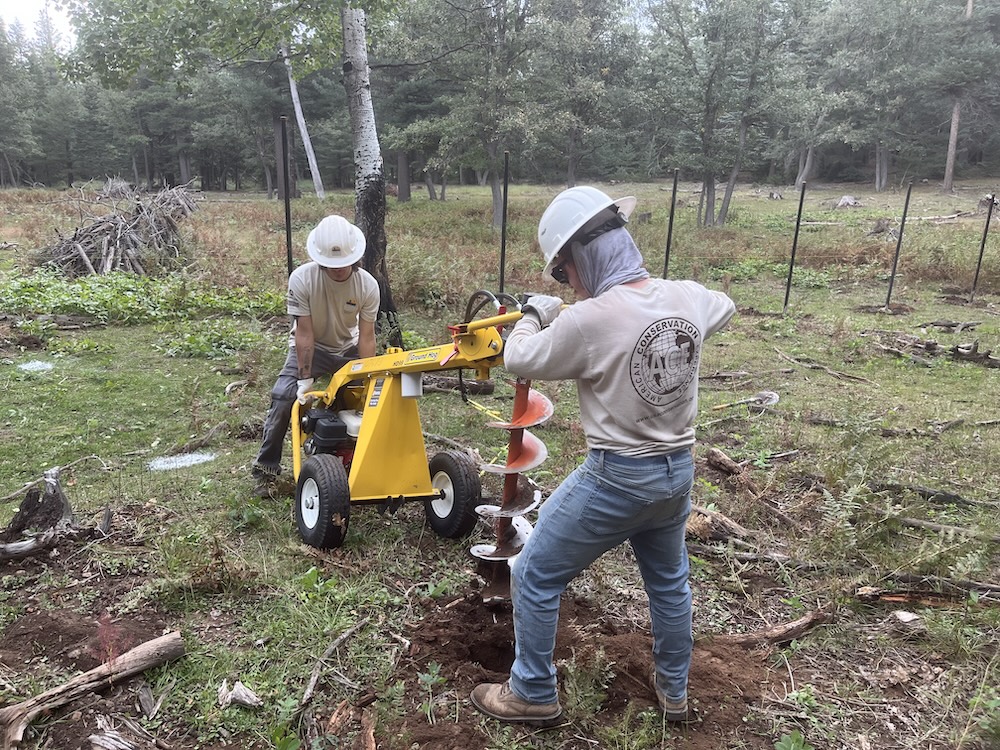 enclosures will help the Forest Service study how aspen trees respond to different management approaches. One area will remain untreated, allowing researchers to observe how the aspens respond naturally, while the other will be used to study the effectiveness of various treatments for addressing oystershell scale infestations that have been infecting the trees.
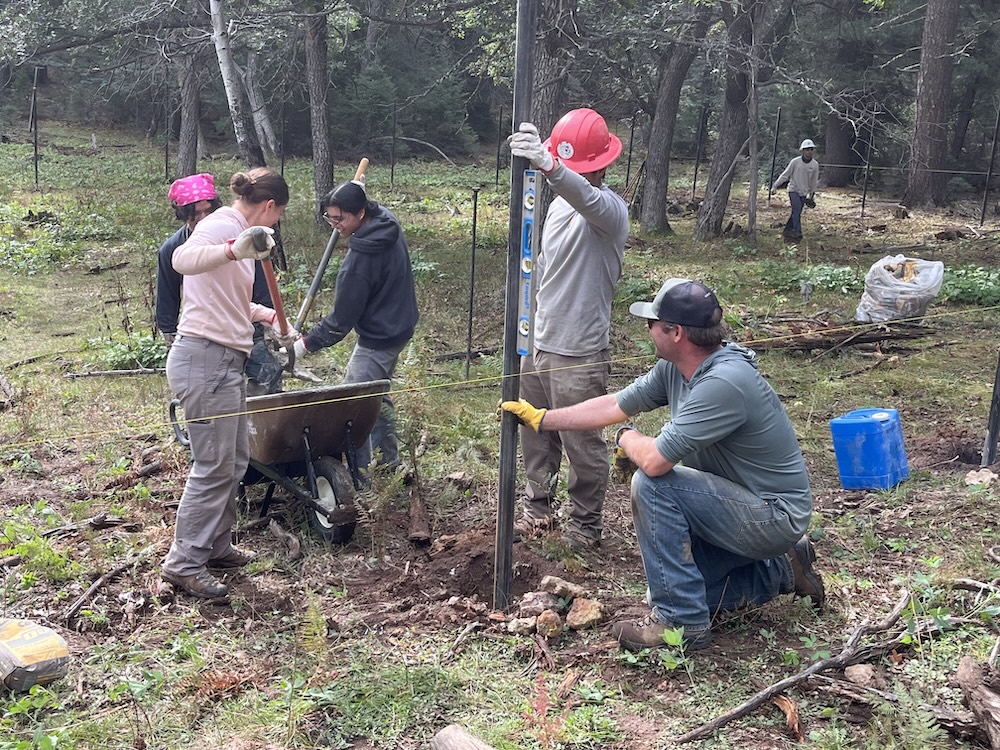
Our goal over these two days was to auger the holes and install approximately 32 perimeter posts. We had already installed the corner posts the week before to help get things moving. We were joined by a Forest Service ACE crew, and part of the project was teaching crew members some of the skills involved in this type of construction. Many had never installed fence posts before, so our regular volunteers walked them through operating the auger, digging holes to the proper 24-inch depth, running string lines, leveling posts, and mixing and pouring concrete.
We broke into teams, with everyone pitching in and learning along the way. By the end of Wednesday, all the holes had been augured and most were cleaned out, with approximately 10–12 posts already set.
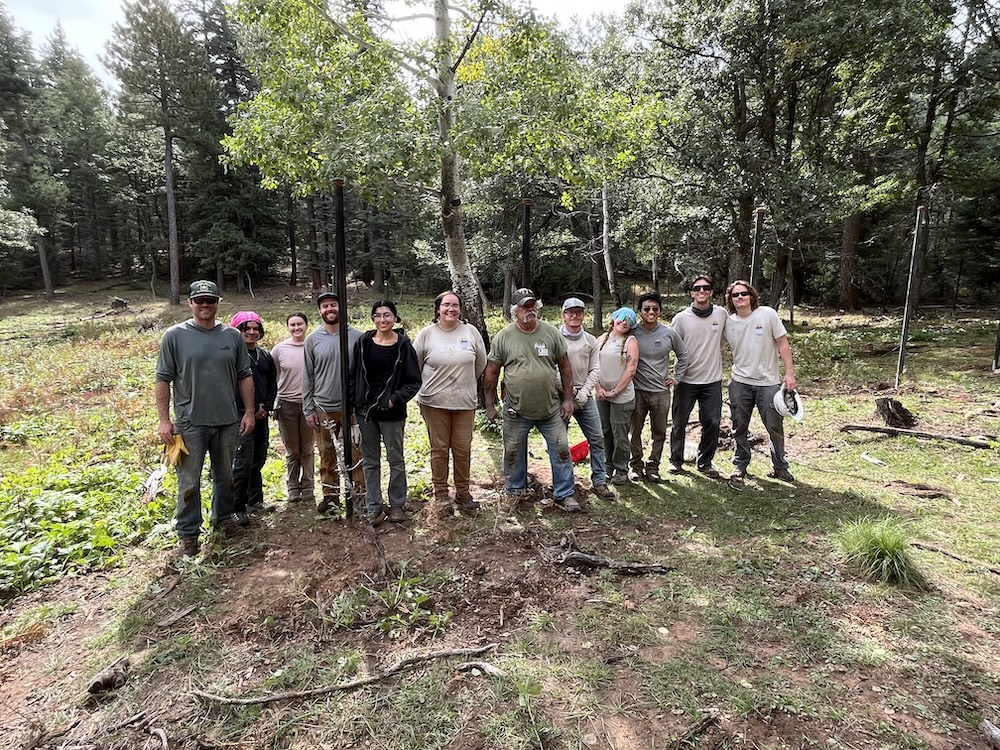
On Thursday, the ACE crew returned along with several additional Forest Service employees. With so many extra hands, the work moved quickly! Teams worked together mixing concrete, setting posts, and making sure everything was level. It was another great opportunity to share knowledge and give others some hands-on experience with habitat project construction. By 11 a.m., all of the perimeter posts were installed and leveled! We still have a little work left to finish this project. We plan to return in a couple of weeks with another ACE crew to install the panels, top and bottom rails, and gate.
A big thank-you to our regular AES volunteers, the Forest Service employees, and the ACE crew for their hard work and willingness to jump in and learn. Projects like this are a great example of how partnerships and teamwork can make a difference. While this project is focused on research, the information gathered will help land managers better understand aspen health and how to manage these important trees for the future.

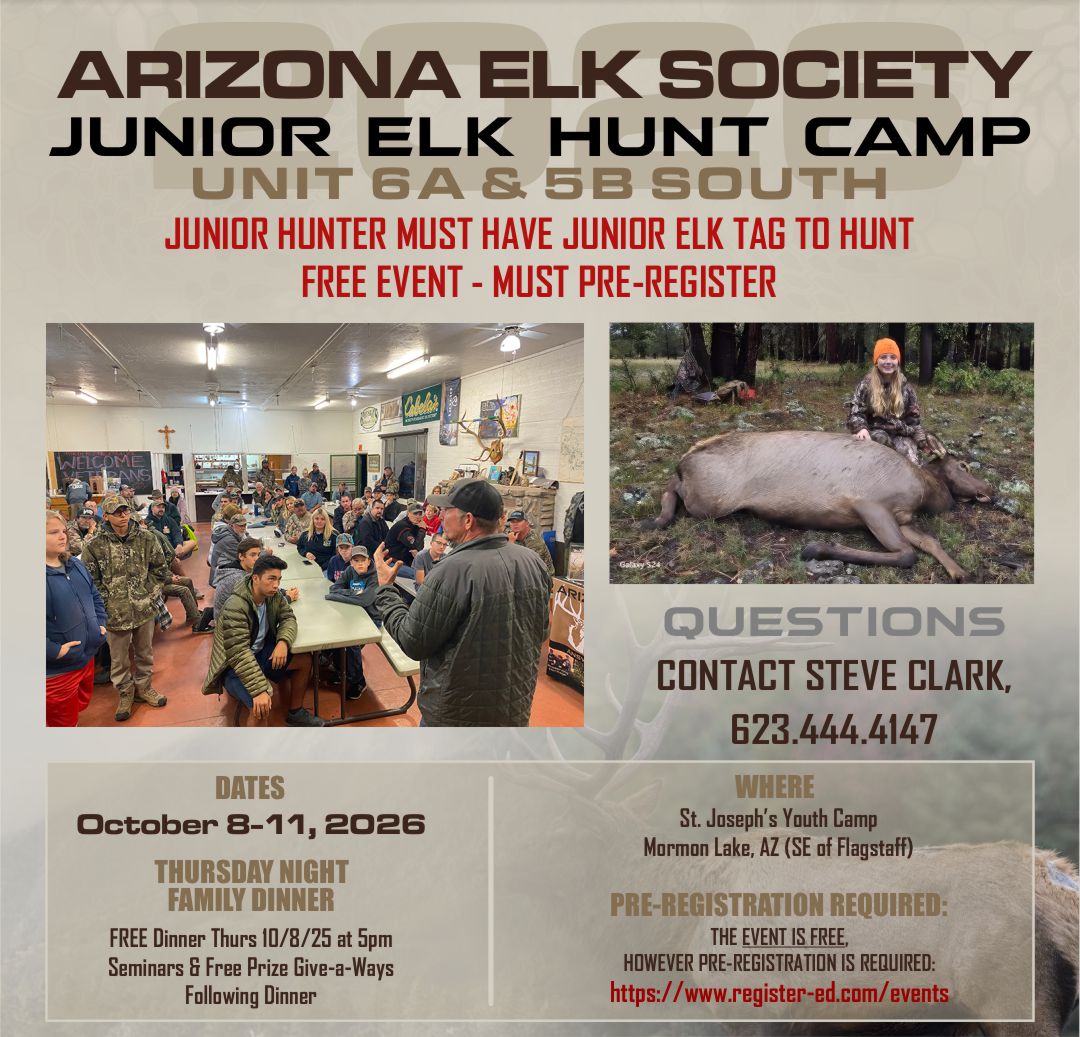
As of now we have plenty of cooks for this camp but we can always use more mentors! If you have hunting experience and want to come help the youth, come on out!
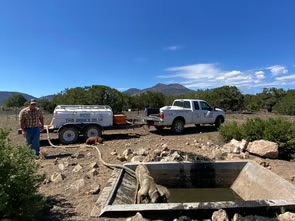
Your donation dollars at work! This picture is from August 19th in Northern Arizona. AES volunteers are the boots on the ground delivering water throughout Arizona. Please consider volunteering or donating today. We live in the desert. It's all about the water!
Water during the birthing season keep the mothers healthy and helps the mothers produce better quality milk and more of it for the newborns.
Water helps distribute the Elk herds and other wildlife for better utilization of the available forage. Insufficient water distribution causes wildlife to gather in specific areas, leading to excessive habitat use. This overutilization results in habitat degradation and a depletion of available food resources.
There are many areas with great habitat for wildlife but no water to sustain them. If we could increase water in areas of quality wildlife habitat and forage we can sustain more wildlife. Higher herd numbers equals more tags for hunters.
It doesn't get much prettier than this! Our water haulers have been busy keeping the catchments filled. OVER 225,000 gallons so far this year. How can you help?
 Do you believe in leaving a long-lasting outdoor legacy for future generations?
























Arizona's conservation leader
